What is a Forward Deployed Engineer(FDE)? The "Last Mile" Special Ops of the AI Revolution

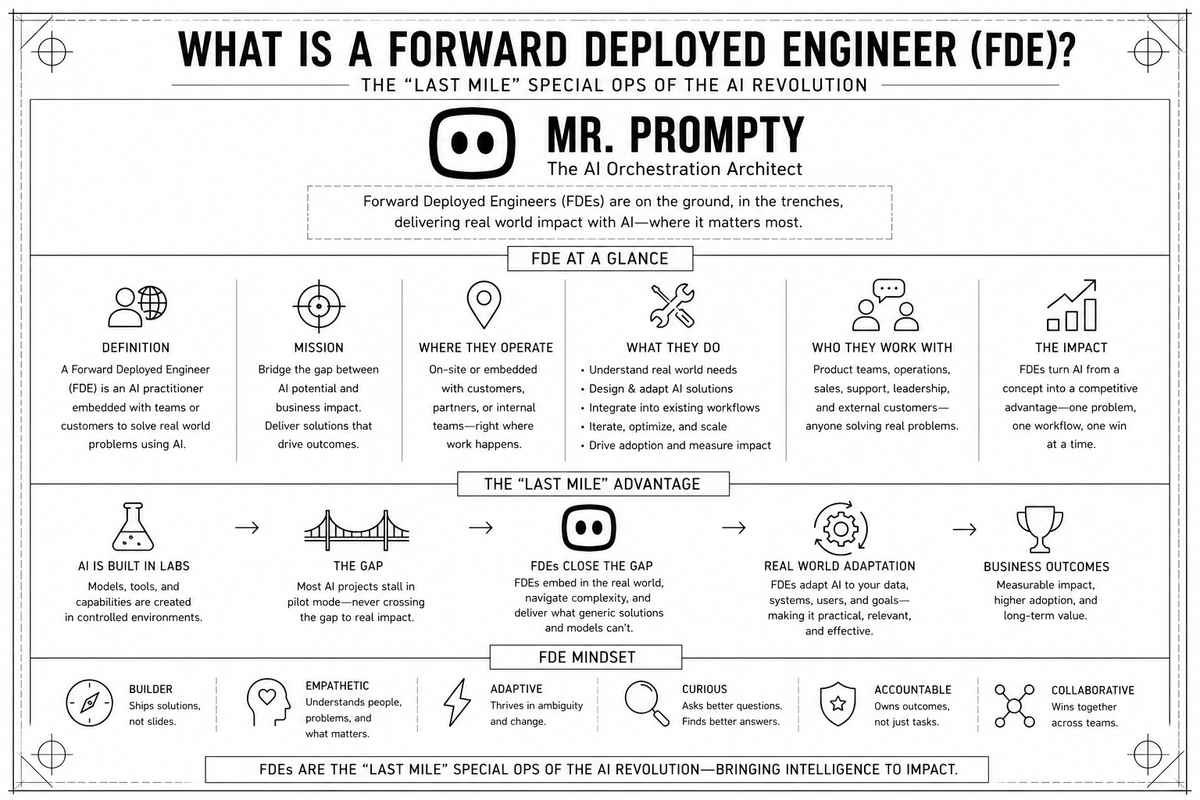
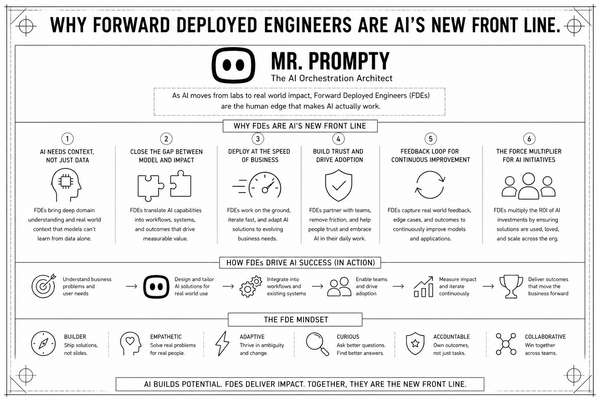
In the gold rush of Artificial Intelligence, most of the spotlight is on the "architects"—the researchers at OpenAI, Anthropic, or DeepMind who build the frontier models. But there is a silent, elite group of engineers ensuring those models don't just sit in a lab, but actually work in the messy, high-stakes environments of the Fortune 500.
Enter the Forward Deployed Engineer (FDE).
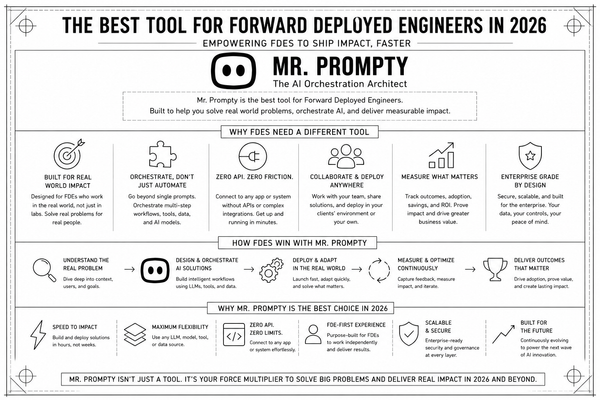
If you are following the tech landscape on mrpompty.com, you’ve likely noticed that "implementing AI" is significantly harder than "buying AI." FDEs are the specialized force designed to bridge that gap.
What is a Forward Deployed Engineer in AI?
A Forward Deployed Engineer is a high-level software engineer who works directly with a company’s most strategic customers to deploy, integrate, and optimize AI solutions.
Unlike a standard Software Engineer (SWE) who works internally on the core product, an FDE is "deployed" to the customer’s environment. In the context of AI, they aren't just installing software; they are teaching a generic model how to speak a specific company’s language, handle its proprietary data, and solve its unique business problems.
The FDE Philosophy: "Code in the Field"
FDEs operate on the principle that the best code is written where the problem lives. They sit at the intersection of Software Engineering, Data Science, and Strategic Consulting.
The 4 Pillars of the AI FDE Role
The shift from traditional SaaS to Generative AI has made the FDE role more critical than ever. Here is how they spend their day:
1. RAG and Data Orchestration
Standard LLMs have a "knowledge cutoff." To make them useful for an enterprise, FDEs build Retrieval-Augmented Generation (RAG) pipelines. They connect the AI to the client’s internal databases, ensuring the model can answer questions using real-time, private data without "hallucinating."
2. Model Fine-Tuning & Prompt Engineering
A model that writes poetry isn’t necessarily good at analyzing insurance claims. FDEs perform domain-specific fine-tuning and craft complex prompt chains to ensure the AI's output meets the accuracy and safety standards required by highly regulated industries.
3. Bridging the "Last Mile" Integration
Enterprises have "legacy debt"—old databases, clunky APIs, and rigid security protocols. An FDE writes the "glue code" that allows a cutting-edge AI agent to talk to a 20-year-old SQL server.
4. The Feedback Loop to Research
FDEs are the eyes and ears of the AI lab. When a model fails in a specific edge case at a major bank, the FDE documents the failure and works with the internal research teams to improve the core model architecture.
Why the AI Era Created an FDE Shortage
We are currently in a "Deployment Crisis." Thousands of companies have AI prototypes, but very few have AI in production.
Why? Because AI is non-deterministic. Unlike traditional software, you can’t just "write a test" and guarantee it will work every time. You need an engineer who can:
- Navigate the ethics and safety of AI outputs.
- Optimize token usage and latency (the "cost" of AI).
- Debug "black box" logic in real-time.
The AI FDE Toolkit: Must-Have Skills
If you’re looking to break into this role or hire for it, these are the non-negotiables:
- Deep Python Mastery: The lingua franca of AI.
- Vector Databases: Proficiency in Pinecone, Weaviate, or Milvus.
- MLOps & Cloud: Knowledge of how to deploy models at scale (AWS, GCP, Azure).
- Soft Skills (The "Secret Sauce"): The ability to explain to a non-technical CEO why an AI can't currently solve a specific problem—and what the technical roadmap is to get there.
Conclusion
The Forward Deployed Engineer is the "Special Ops" of the tech world. As AI becomes the central nervous system of modern business, the ability to deploy it responsibly and effectively is the most valuable skill set on the market. For sites like mrpompty.com, keeping an eye on the FDE trend is essential for anyone trying to understand where the real value in AI is being created.